When a rideshare accident occurs, determining legal responsibility can be complex. Gould Injury Law regularly helps injured individuals understand how Connecticut tort laws affect rideshare accident claims and what legal options are available under state law. Because Connecticut operates as a tort state, fault plays a central role in how compensation is awarded after an accident.
Rideshare crashes often involve more than one driver, multiple insurance policies, and detailed fault analysis. Understanding how Connecticut’s legal system applies negligence rules is essential to protecting your rights.
Connecticut Is a Tort State, Not a No Fault State
Connecticut operates as an at fault state, not a no fault state. This means the insurance company for the at fault party is financially responsible for paying damages resulting from a car accident. In rideshare accidents, this can include the rideshare driver, other drivers, or multiple at fault parties.
Because fault determines who pays damages, insurance adjusters closely review accident reports, police reports, and witness statements before approving an insurance claim.
How Connecticut’s Comparative Negligence Law Works
Connecticut follows modified comparative negligence, sometimes referred to as Connecticut’s comparative negligence law. Under this system, an injured party can recover damages only if they are not more than 50 percent at fault for the accident.
If a court finds that a person was partially responsible, their compensation is reduced by their percentage of fault. For example, if the injured party is 20 percent at fault, their financial compensation is reduced by 20 percent.
This differs from contributory negligence, which can bar recovery entirely, and from pure comparative negligence, which allows recovery regardless of fault percentage.
Comparative Fault in Rideshare Accident Cases
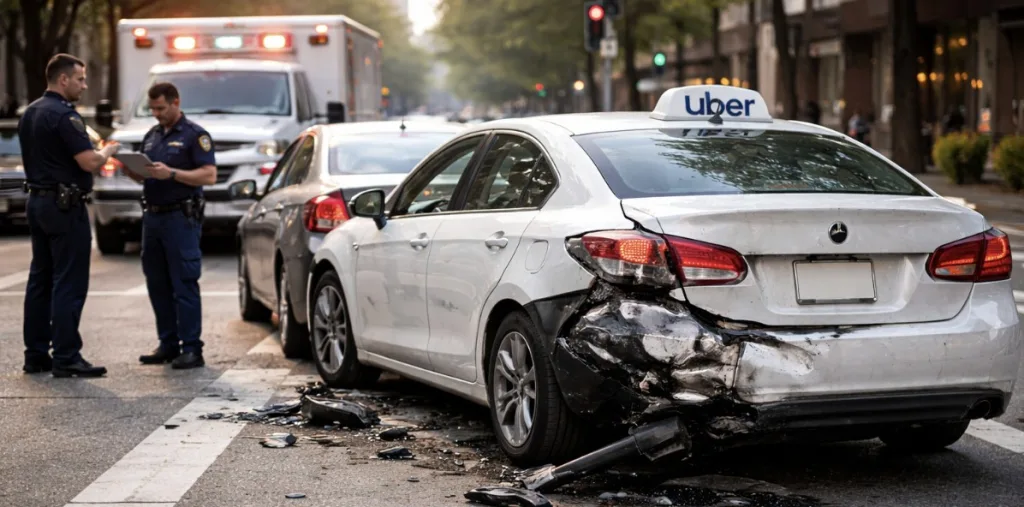
Rideshare accident cases often involve comparative fault because multiple drivers may share responsibility. A rideshare driver may be distracted driving, while another vehicle may violate traffic laws or fail to exchange information at the scene.
When more than one driver is involved, insurance companies attempt to determine fault percentages for each party. Comparative fault plays a significant role in settlement negotiations and the outcome of a personal injury claim.
Determining Fault After a Rideshare Accident
To determine fault, a legal team will gather evidence such as:
- Accident reports and police reports
- Medical records and medical bills
- Property damage documentation
- Weather conditions at the time of the accident
- Statements from drivers and other parties
A thorough investigation helps identify at fault parties and supports a successful claim.
How Negligence Impacts Compensation
Negligence is a central concept in Connecticut personal injury law. To recover damages, the injured party must prove that another person breached a duty of care and caused injuries.
Negligence may include distracted driving, speeding, or failing to follow traffic laws. If the injured party is found partially responsible, their damages are reduced under comparative negligence rules.
Insurance Coverage in Rideshare Accident Claims
Rideshare accidents involve layered insurance coverage. Depending on whether the driver was logged into the app, transporting a passenger, or off duty, different insurance policies may apply.
An insurance claim may involve:
- The rideshare company’s policy
- The driver’s personal auto insurance
- Insurance coverage from other drivers involved
Insurance adjusters may request a recorded statement and closely review fault before agreeing to pay damages.
Recoverable Damages in a Rideshare Accident
In a personal injury lawsuit or personal injury claim, injured individuals may seek compensation for:
- Medical expenses and future damages
- Property damage
- Non economic damages such as emotional distress
- Lost income and reduced earning capacity
The goal is to recover damages that reflect full and fair compensation under the law.
Statute of Limitations in Connecticut
Connecticut has a strict statute of limitations for car accident claims. Generally, injured parties have a limited time to file a claim or personal injury lawsuit. Missing this deadline can eliminate legal rights to compensation, regardless of fault.
Acting quickly allows a law firm to gather evidence, preserve records, and protect your legal options.
Why Legal Representation Matters in Complex Cases
Rideshare accidents are complex cases involving multiple insurance companies and detailed fault analysis. A personal injury attorney provides expert analysis, manages settlement negotiations, and ensures the injured party does not accept less than maximum compensation.
Legal help is especially important when comparative negligence or multiple at fault parties are involved.
Speak With a Connecticut Rideshare Accident Lawyer Today
Rideshare accident claims require a clear understanding of Connecticut tort laws and how fault affects compensation. Gould Injury Law has extensive experience handling car accident cases involving rideshare companies and disputed liability.
If you were injured in a rideshare accident and need guidance, call Gould Injury Law at (203) 764-1900 today for a free consultation. We are ready to evaluate your claim and help you pursue fair compensation under Connecticut law.